Introduction
As the mainstream choice for high-speed applications, permanent magnet Brushless DC (BLDC) motors are rapidly penetrating various application fields, with immense room for growth remaining in the home appliance sector. What are the current technological requirements for BLDC motors in home appliances? What new demands do they place on controller design? And how large is the future market potential for these motors? Through discussions with motor industry experts, this article provides the answers.
Foreword
In June of last year, six major Chinese government departments—including the Ministry of Industry and Information Technology (MIIT) and the National Development and Reform Commission (NDRC)—jointly issued the Industrial Energy Efficiency Improvement Action Plan. The plan states that by 2025, newly added high-efficiency and energy-saving motors will account for 70% of the total. As a type of high-efficiency motor, the permanent magnet BLDC motor features high efficiency, low noise, high precision, and a long lifespan, accelerating its adoption across various markets.
What is the current market share of permanent magnet BLDC motors? Where are the potential markets? What technical bottlenecks remain, and how vast is the future development space? Let's explore these questions with industry experts.
1. Market Size and Potential of Permanent Magnet BLDC Motors
A permanent magnet BLDC motor utilizes permanent magnetic materials for its rotor and operates without brushes. Compared to traditional brushed DC motors, its unique design—featuring a rare-earth permanent magnet rotor and flexible connections—grants it high efficiency, low noise, high speed, precision, and longevity. As end-use applications increasingly demand energy conservation, smart control, and optimized user experiences, BLDC motors are becoming the primary choice for high-efficiency applications.
According to Grand View Research, the global BLDC motor market reached $189.0 billion in 2022 and is projected to grow to $223.0 billion by 2025, representing a CAGR of 5.7%. Meanwhile, China's BLDC market is expected to achieve an average annual growth rate of 15% from 2018 to 2023, outpacing the global average.
Currently, BLDC motors are widely used in fans, pumps, electric vehicles, power tools, compressors, and agricultural machinery. In the home appliance sector, demand is rising due to stricter standards for control precision, variable-frequency energy savings, and overall performance.
In major "white goods" like air conditioners, refrigerators, and washing machines, BLDC motors are already widely adopted. They enable continuously variable transmission, reduce energy consumption, and significantly boost performance, driving sales of high-end appliances. However, in appliances such as range hoods, dishwashers, garbage disposers, clothes dryers, vacuum cleaners, and air purifiers, the penetration rate remains relatively low, indicating massive market potential.
Dr. Wang Yunchong, an Associate Professor at Zhejiang University, noted: "Compared to asynchronous motors, permanent magnet BLDC motors offer higher energy efficiency, reaching IE5 or higher standards, whereas asynchronous motors often peak at IE3. They have huge potential in home appliances, drones, and EVs. Particularly in fan and pump applications, traditional low-cost induction motors are facing a strong replacement trend."
Data from the National Bureau of Statistics, China Customs, and Elecfans shows that the penetration rate of BLDC motors in home appliances continues to rise, reaching 42% in air purifiers, 30% in vacuum cleaners, and 20% in electric fans—further revealing the significant room for replacement.
2. Technical Requirements for BLDC Motors in Home Appliances
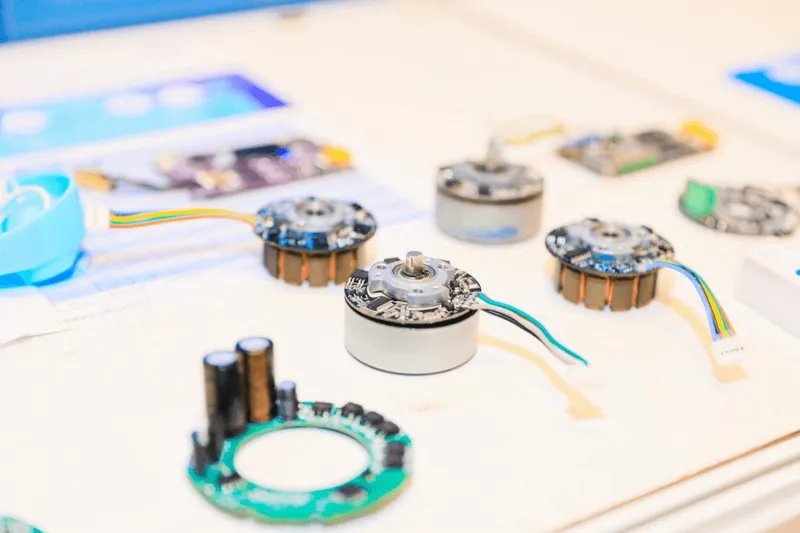
When discussing technical standards for household appliances, user safety is paramount, followed by product quality and reliability. Modern appliances also demand higher energy efficiency, lower noise, and more economical costs.
First, safety is crucial. BLDC motors require excellent insulation to prevent short circuits and electric shocks, along with proper grounding. Overload protection must be in place, ensuring users cannot access live components.
Second, performance and reliability. The motor must start stably within a specified time and run continuously without overheating or failing. To ensure peak reliability in extreme conditions, our engineering standards dictate rejecting standard ball bearings in favor of bearings utilizing specialized wide-temperature grease (resistant to both high and low temperatures). Furthermore, stable operation relies on precise electrical configurations; for instance, empirical resistance measurements—such as Black-Red at 58Ω, Red-White at 109Ω, and Black-White at 50Ω—are critical benchmarks for quality assurance and consistent motor layout.
Third, energy efficiency standards. Many countries enforce strict efficiency levels to reduce energy consumption. Manufacturers must ensure their products meet the standards and certifications of their target markets, such as UL (US), CE (Europe), and CCC (China). For appliances exposed to water, specific Ingress Protection (IP) ratings are necessary to prevent accidents.
3. New Demands on Motor Controller Design
The motor converts electrical energy into mechanical energy, while the controller governs its operation. Choosing a robust controller solution is critical for the BLDC motor's performance.
The new demands primarily focus on safety/reliability and integration.
With the widespread use of automated electronic control systems, safety is the core design element. Engineers must evaluate potential faults during the design phase and implement strategies to mitigate them. The IEC60730 safety standard further highlights the importance of electronic controls in ensuring safe operation.
Moreover, as appliance functions diversify, single-function controllers are no longer sufficient. Integrating multiple functional modules (e.g., temperature, humidity, and lighting control) into a single controller reduces system costs and improves maintainability and scalability. This modular design provides users with a smarter, more convenient experience.
However, challenges remain. As power output increases, so does heat generation and current management, increasing the complexity and difficulty of controller design.
4. Future Development Space
Data indicates massive untapped potential for BLDC motors in appliances. In products with less than a 20% penetration rate (like range hoods, dishwashers, gas water heaters, hair dryers, and electric toothbrushes), there is still around 80% market space remaining.
Industry experts believe the BLDC market is still in its growth phase. Compared to other motors, they offer superior power density. Looking ahead, to reduce costs, designs requiring little to no rare-earth materials may become the future technical trend for permanent magnet BLDC motors.
5. Direct Factory Capabilities & Procurement Solutions
As the market expands, partnering with a reliable manufacturer is more important than ever. We focus on delivering top-tier motor solutions backed by rigorous production capacity.
Direct Factory Data:
- Production Lines: Comprehensive automated assembly lines operating globally.
- Core Products: Single-phase AC asynchronous motors, air cooler motors, and industrial heater motors.
- Market Scale: Consistent delivery to top-tier global B2B clients and cross-border e-commerce networks.
Our Core Advantages:
- High-Efficiency R&D: Dedicated to improving motor efficiency and application integration.
- Stringent Quality Control: Comprehensive testing, including precise resistance and durability benchmarking under extreme conditions.
- Global Certifications: Fully compliant with international safety and performance standards.
- One-Stop Service: We provide comprehensive solutions, allowing you to purchase matching accessories such as fan wheels and blades all at once, significantly streamlining your procurement process.